Venetian Plaster: Italian Finesse on the Wall
Venetian plaster is far more than a decorative wall finish. It is an artisanal technique in which lime, marble powder, colour and craftsmanship come together to create a surface that changes with the light.
Where a conventional painted wall primarily provides a backdrop, Venetian plaster gives the wall its own character. Subtle variations in colour, depth and light reflection make every finish unique.
At Alma de Muras, we bring together this centuries-old Italian tradition with contemporary interior architecture and the refined materials of Giorgio Graesan & Friends.
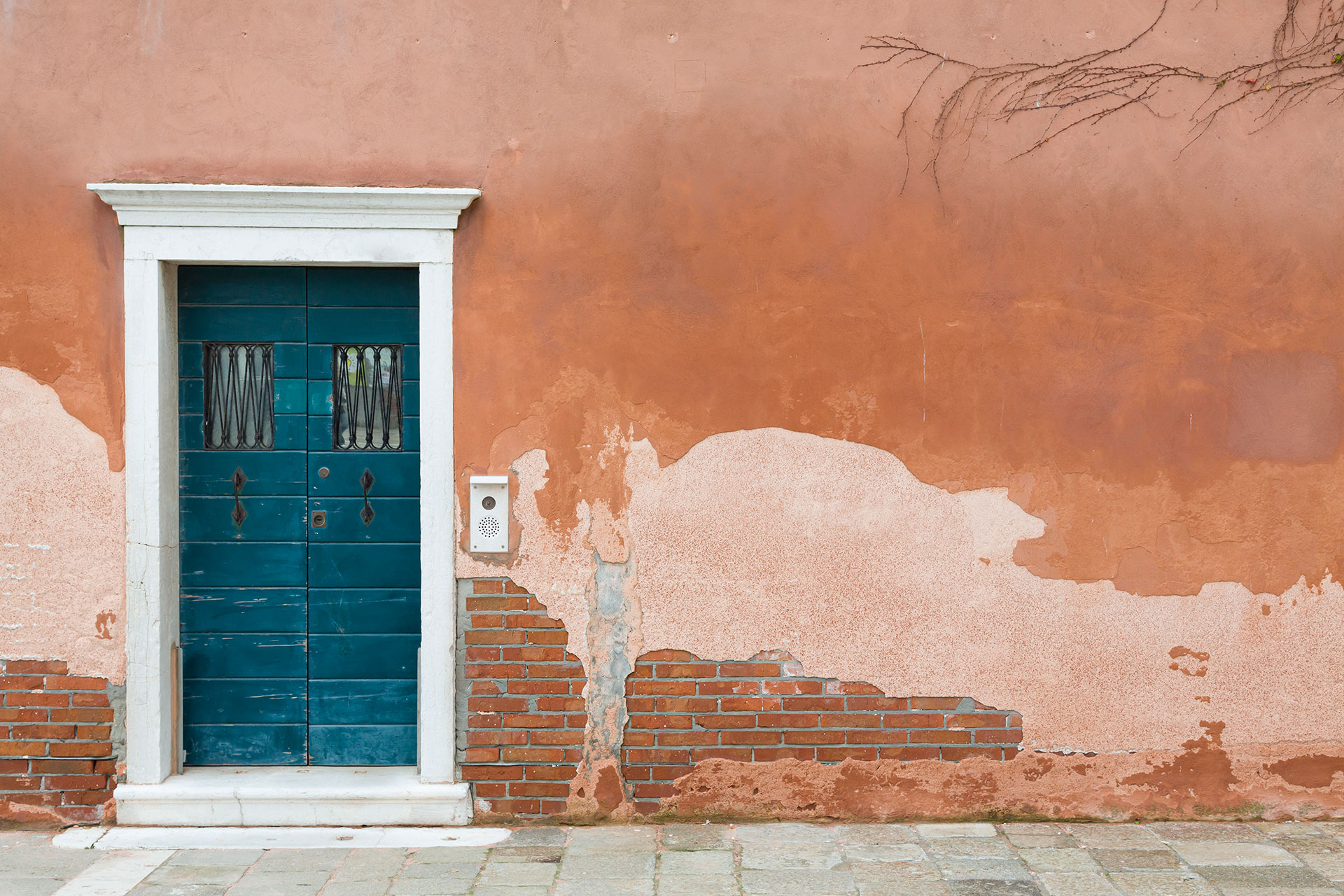
What is Venetian plaster?
Venetian plaster — known in Italy as stucco veneziano or marmorino, among other names — is a decorative wall finish traditionally based on lime and marble.
Applied in thin layers and worked with a specialised spatula or trowel, the material creates a surface with remarkable visual depth. Depending on the chosen technique, the finish can appear soft and matt, silky and satin-like, or highly polished and luminous.
What makes Venetian plaster distinctive is not only the material itself, but the way it is applied and worked.
Every movement of the spatula influences the final result. Rather than creating a perfectly uniform surface, the technique produces a living material in which colour, movement and light interact with subtle variations.
Traditional lime-based systems also benefit from a natural carbonation process. Giorgio Graesan’s Spatula Stuhhi, for example, is formulated with lime and marble powders and applied in three stages to create a natural, breathable finish.
A centuries-old Italian tradition
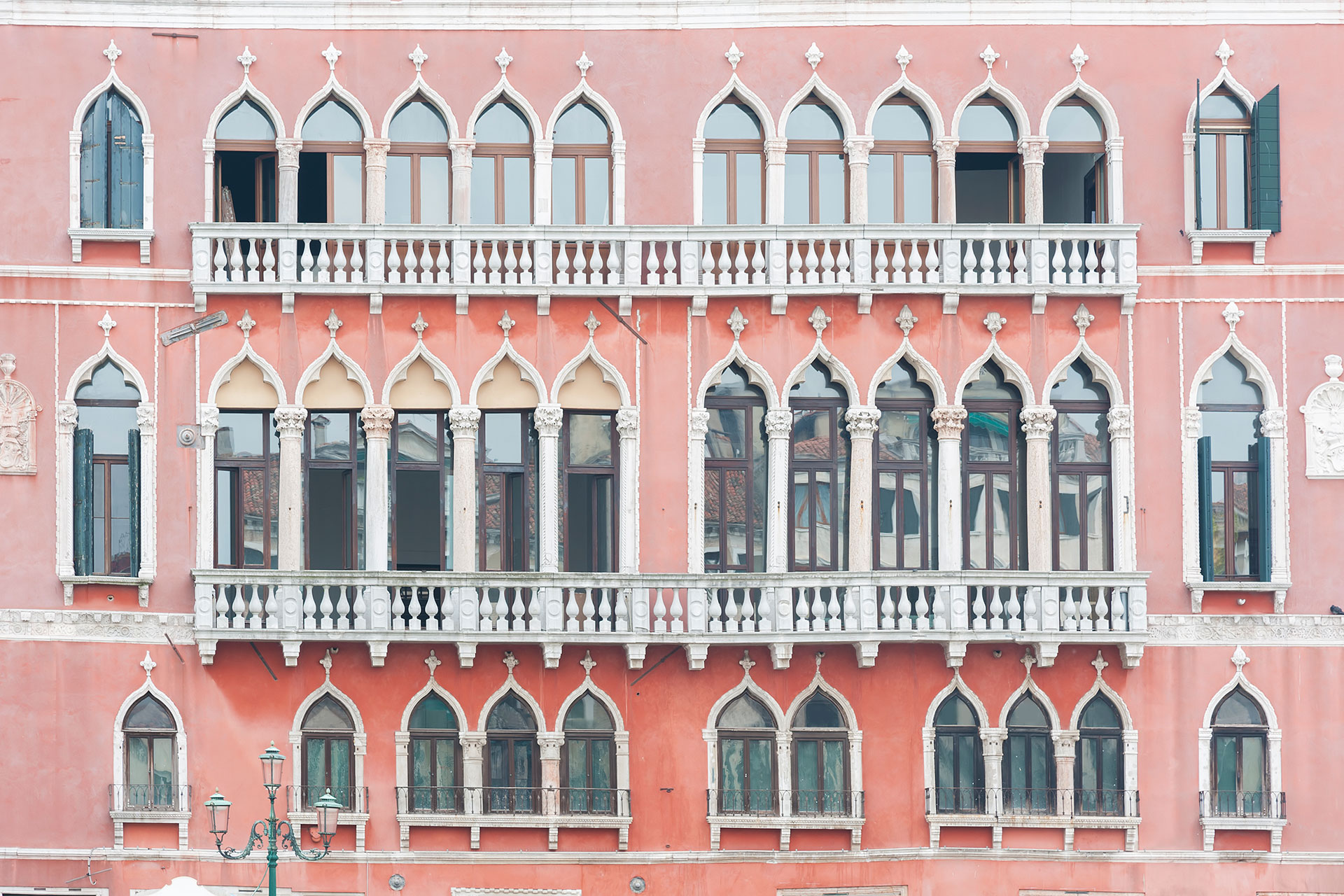
The history of Venetian plaster reaches much further back than Venice itself.
Decorative lime and marble finishes were already used in antiquity. The Romans developed techniques that allowed walls to evoke the appearance of precious marble and natural stone. The tradition of marmorino was later revived and further developed in Italy, particularly during the Renaissance.
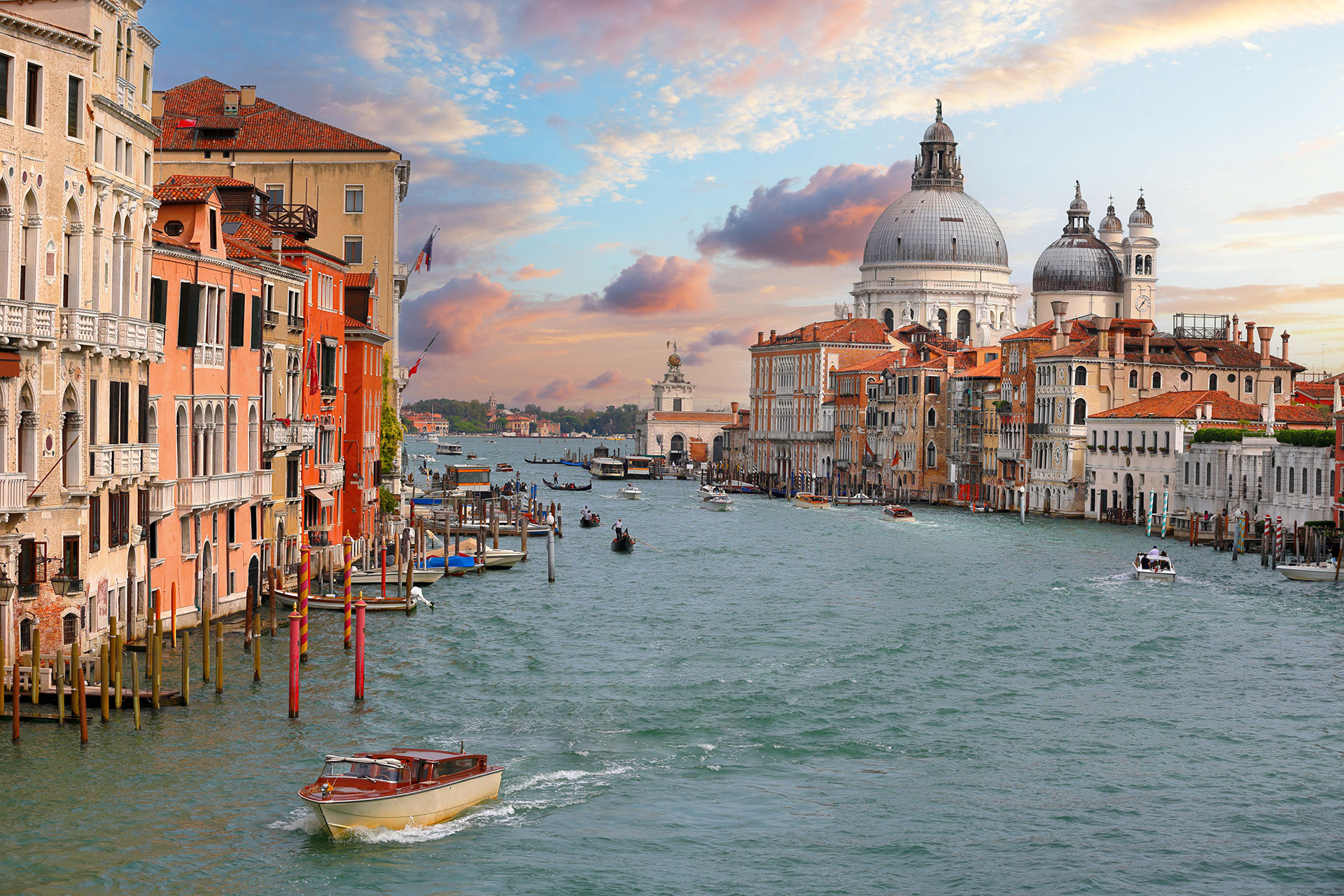
Venice eventually gave the technique its name.
This was no coincidence. In a city built on water, lightweight, durable and moisture-resistant materials were especially valuable. Lime-based finishes also offered a way of achieving the appearance of natural stone without the considerable weight and mass of solid marble.
During the Renaissance, Italian craftsmen continued to refine these techniques. Venetian plaster found its place in palaces, villas and prestigious interiors.
A tradition emerged in which material, architecture and craftsmanship became inseparable.
Modern Venetian plaster builds upon this heritage while incorporating contemporary formulations, pigments and application techniques.
Venetian plaster versus conventional plaster
The essential difference lies in purpose, material and execution.
Conventional plaster is generally used to create a flat, even surface ready for further finishing. Its purpose is usually to provide a neutral architectural background.
Venetian plaster takes an entirely different approach.
Here, the wall itself becomes the finish.
The surface is built up through multiple thin layers. The way these layers overlap creates subtle variations, movement and depth. The surface can then be compacted, smoothed or polished to achieve the desired character.
The result can evoke the appearance of:
- polished marble;
- natural stone;
- limestone;
- travertine;
- silk;
- concrete;
- soft, cloud-like textures;
- deeply luminous mineral surfaces.
The degree of sheen can also vary considerably. Marmorino, for example, can have a predominantly matt to satin appearance, while a traditionally polished stucco veneziano can achieve a much more pronounced gloss. In practice, however, the terminology often overlaps.
Venetian plaster is therefore not simply another type of paint.
It is a hand-crafted material surface created as part of the architecture itself.
The possibilities of Venetian plaster
One of the defining qualities of Venetian plaster is the freedom it offers.
By varying the material, grain size, pigment, direction of application, pressure of the spatula and degree of polishing, entirely different visual effects can be created.
Polished marble
One of the most recognisable expressions of Venetian plaster.
By compacting and polishing fine layers of lime and marble powder, a smooth, almost reflective surface is created in which light appears to penetrate the material itself.
Soft lime textures
Not every Venetian finish needs to be highly polished.
A more restrained treatment can create a soft, natural surface that complements contemporary minimalism and interiors built around quiet materials and subtle contrasts.
Natural stone
With the appropriate material and application technique, a wall can take on the character of different forms of natural stone.
Travertine effects
Through carefully controlled texture and colour, a surface can evoke the natural character of travertine, including its pores, irregularities and horizontal movement.
Cloud-like colour variations
By layering different tones with restraint, colour becomes more than a uniform field. It moves gently across the surface, creating depth and a sense of continuous variation.
Metallic and decorative effects
Contemporary Italian decorative systems also allow lime-based finishes to be combined with other materials and techniques, opening the door to more expressive and contemporary interpretations.
Giorgio Graesan, for example, offers a broad range of decorative systems alongside its traditional lime finishes, including Spatula Stuhhi, Marmorino 2020, Muro Naturale and a variety of complementary decorative techniques.
Giorgio Graesan — Italian tradition, contemporary innovation
For Alma de Muras, Venetian plaster is closely connected to the world of Giorgio Graesan & Friends.
Drawing on a long Italian tradition of decorative materials, the family-owned company has developed its own distinctive approach to surfaces, colour and material expression. In 1990, Giorgio Graesan introduced Spatula Stuhhi, which has since become one of the recognised finishes within its collection.
Spatula Stuhhi is a lime-based decorative wall finish formulated with lime and marble powders. According to Giorgio Graesan’s technical documentation, it is applied in three layers and can be polished to achieve a luminous finish. The material can also be tinted using mineral pigments.
Yet Giorgio Graesan is more than a producer of a particular type of Venetian plaster.
The brand approaches decorative wall finishing as a form of material and colour research. The result is a broad palette of techniques through which interior architects and skilled craftsmen can create a specific atmosphere, texture and material presence.
This closely reflects the philosophy of Alma de Muras: not simply to finish a wall, but to create the right material expression for a space.
Venetian plaster in high-end interiors
In high-end interiors, Venetian plaster is rarely used simply to create ‘a beautiful wall’.
The finish becomes part of the architectural concept.
A wall may deliberately provide a quiet counterpoint to natural stone, timber, brass or textiles. A soft lime texture can bring calm to a minimalist interior, while a highly polished marble effect can introduce a more monumental presence.
The technique is particularly well suited to interiors where natural materials, tactility and subtle variations in colour are central to the design.
Its applications include:
- private residences;
- villas;
- apartments;
- hotels;
- restaurants;
- reception areas;
- boutiques;
- high-end offices;
- wellness and hospitality spaces.
Within contemporary interior architecture, plaster and lime finishes have also regained attention as part of a wider appreciation for warm, tactile and natural materials.
Their strength lies not in making a statement for its own sake, but in creating depth, atmosphere and material richness.
Finish, texture and light
Perhaps the most fascinating quality of Venetian plaster is its relationship with light.
A conventional painted surface tends to absorb or reflect light relatively evenly. A layered lime and marble finish behaves differently.
The individual layers, mineral components and degree of polishing create subtle variations in the way light is reflected. As a result, the same wall may appear different in the morning than it does in the evening.
The direction of the light is equally important.
Raking light reveals texture. Natural daylight enhances tonal variations. Artificial lighting can give a polished surface an almost jewel-like luminosity.
With a finish such as Spatula Stuhhi, this relationship with light becomes an integral part of the aesthetic experience. The surface responds to its surroundings, revealing different nuances as the light changes.
A Venetian wall is therefore never entirely static.
The finish changes with the space.
Why professional craftsmanship matters
Venetian plaster can look deceptively simple in photographs.
It is anything but.
A high-quality finish requires far more than applying a decorative material to a wall. The substrate must be properly prepared, each layer must be worked at the right moment, and the pressure, direction and movement of the spatula all influence the final result.
Polishing requires particular experience.
Too little working can leave a surface flat and lifeless. Too much, or the wrong technique, can create unwanted marks, contrasts or irregularities.
Venetian plaster is therefore, at its heart, an artisanal process.
Giorgio Graesan itself emphasises the importance of professional experience in its technical documentation for Spatula Stuhhi, recommending application by skilled professionals who fully understand the method and procedure required to achieve the intended result.
The difference between an ordinary decorative wall and a truly refined Venetian finish lies not only in the material.
It lies in the hand that brings it to life.
A surface that can never be exactly repeated
Perhaps the most beautiful quality of Venetian plaster is that it cannot be fully reduced to a colour sample.
A sample can communicate an impression of colour, sheen and texture. But on a full wall, something else happens: movement, scale, light and rhythm come together.
Every application becomes unique.
At Alma de Muras, we therefore do not begin with the question of which colour should go on the wall.
We begin with a broader question:
What should the wall contribute to the space?
Calm. Depth. Contrast. Warmth. Luxury. Texture. Or perhaps an almost monumental presence.
With the Italian finishes of Giorgio Graesan, the wall is no longer merely a background.
It becomes material.
Venetian plaster in West Flanders
Alma de Muras creates decorative wall finishes using Venetian plaster techniques throughout West Flanders and beyond. From our studio and showroom in Oudenburg, we guide private and professional clients in selecting and applying Italian lime and marble finishes.
As an official distributor and specialist applicator of Giorgio Graesan & Friends, we combine authentic Italian materials with technical expertise and traditional craftsmanship. From subtle Marmorino finishes to polished Venetian plaster, every application is tailored to the architecture and character of the space.
Considering Venetian plaster for your interior? Get in touch with Alma de Muras to discuss your project or arrange a personal consultation at our showroom in Oudenburg. We will be pleased to explore the possibilities with you.